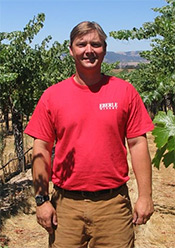
MICHAEL SILACCI – WINEMAKER, OPUS ONE
THE STORY
Château Mouton Rothschild winemaker Lucien Sionneau and Robert Mondavi’s son Timothy made the partnership’s first vintage at the Robert Mondavi Winery in 1979. The following year the partners officially announced their joint venture.
In 1981 a single case of the joint venture wine sold for $24,000 at the first Napa Valley Wine Auction – the highest price ever paid for a California wine. In 1982 Robert Mondavi and Baron Philippe de Rothschild began label design. The partners agreed to choose a name of Latin origin for the joint venture, allowing for easy recognition in both English and French. Baron Philippe announced his choice, “Opus,” a musical expression denoting the first masterwork of a composer. Two days later he proposed an additional word: “Opus One”.
The 1979 and 1980 vintages were simultaneously unveiled in 1984 as Opus One’s first release. Opus One then became known as America’s first ultra-premium wine, establishing a category of wine priced by the bottle at $50 and above.
Following Lucien Sionneau’s retirement in 1985, Patrick Léon joined Château Mouton Rothschild as winemaker and Timothy Mondavi as co-winemaker of Opus One.
Three years later, Baron Philippe de Rothschild died in France at the age of 85; and Baroness Philippine de Rothschild took the reins of the family wine business. This same year Opus One exported a share of its 1985 vintage – and became the first ultra-premium California wine to be sold in France, the United Kingdom, Germany and Switzerland. International demand for the wine continued, and in 1999 Opus One celebrated its 20th anniversary by holding vertical tastings and gala dinners in Oakville, New York, Paris and London. In 2001 the release of its 20th vintage – the 1998 – was met with gala events in Tokyo and Hong Kong.
The winery’s board of directors appointed David Pearson CEO in 2004, the first person singly responsible for Opus One. Michael Silacci was thereafter named winemaker, the first to assume full responsibility for viticulture and winemaking.
Constellation Brands, Inc. purchased Robert Mondavi Corporation and assumed 50% ownership of Opus One in 2005. Baroness Philippine de Rothschild and then Constellation Brands President and COO Robert Sands announced the Opus One Accord between Baron Philippe de Rothschild, S.A. and Constellation Brands, Inc. Opus One assumed operating independence in three key areas: vineyard management, domestic and international sales, and administration.
THE FOUNDERS
Of the great European wine families, the Rothschilds are perhaps the best known. And Baron Philippe de Rothschild is perhaps the best known of this great family. At the age of 20, Baron Philippe took on the management of Château Mouton Rothschild from his father Baron Henri. Philippe’s vision changed the world of wine: he invented Château bottling, commissioned great artists to illustrate his wine labels – and, in partnership with Robert Mondavi in 1979, created Opus One.
In the 1980s, after her father’s death, Baroness Philippine de Rothschild left a stage career that included the Comédie Française and the Renault-Barrault Theatre Company, bringing her own exquisite style and creativity to the design, construction, and operation of Opus One.
Among great New World wine pioneers, Robert Mondavi is an international icon. Bringing a passion for excellence to everything he did, Robert Mondavi led a renaissance in California fine wine for over six decades. Among other accomplishments, he introduced temperature-controlled fermentation, French oak barrel aging, and high-density viticulture to a fledgling American wine industry. But life was not only wine for Robert Mondavi: he broadened the American cultural palate by marrying fine wine to food, music, and the arts. One of few Americans to have received the French medal of the Legion of Honor, Robert Mondavi showed extraordinary vision as co-founder of Opus One.
WINEMAKING
Winemaking at Opus One resolves to a single goal: to produce an extraordinary wine. No compromises are made. Guided by the vision of our founders, our winemaker Michael Silacci combines intuition and technical acumen with the dual perspective of viticulturist and winemaker.
Every cluster of Opus One grapes is hand-harvested, and just as much care is taken when transporting them from the vineyard to the winery. The integrity of the grapes is assured by placing the clusters in small picking boxes that hold no more than thirty-five pounds (sixteen kilograms).
The grapes are hand-sorted: any leaves or imperfect grapes are discarded. Only gravity is used to move the berries from the destemmer into the stainless steel fermenting tanks below. Stainless steel is the perfect material – it provides a cool and gentle beginning to the fermentation process.
Because Opus One makes only one wine, each tank can be dedicated to a single lot of grapes; each tank is used only once during harvest, so fermentation and maceration need never be rushed. The long, warm maceration in temperature-controlled tanks draws out myriad rich flavors and colors from the skins, seeds, and pulp. The tanks are raised so the free-run wine can flow into new French oak barrels; the remaining skins tumble easily into basket presses.
In another gentle, unhurried step, the skins, seeds, and pulp are pressed. Like the free-run wine, the pressed wine is put into barrels to be aged. To provide backbone to the wine, a portion of the press is often added to the final blend.
Once the wine is safely in barrel, the topping, racking, and fining processes begin. During the first year, Michael continually tastes from each French oak barrel, evaluating the effect of the wood on the wine.
Fining, which occurs after the final racking in tank, also illustrates the hand-crafted nature of Opus One. Carefully added in more turbid vintages, fresh egg whites attract the very small particles that would otherwise remain in suspension. Fining clarifies and polishes the wine. After about a year and a half in barrel, the wine is bottled. Opus One receives an additional year and a half of bottle age before the wine is released— some three years after harvest.
WWW.OPUSONEWINERY.COM
PAUL LATO – OWNER, PAUL LATO WINES
PHILOSOPHY
From my experience of tasting the finest wines from around the world, all the greatest wines possess authenticity, harmony, and elegance. These are the qualities I constantly try to capture in my wines. The ultimate goal is to create wines that are seamless and textural with enough structure and balance to complement fine cuisine.
In order to make wines of the highest caliber, I select unique vineyards that are cared for by talented vineyard managers committed to excellence. I strive to locate and source from not only the best vineyards but the best blocks within each of these vineyards. During the growing season, yields are restricted to achieve maximum concentration of flavor. Harvest is based on physiological ripeness, which changes depending on the vintage characteristics.
Cellar work is based on minimal intervention, cleanliness and purity of intention. Because every vintage is different, I do not believe in recipes. With due respect to science, I do believe that true artisanal winemaking is based on intuition, sensitivity and passion. Keeping the lots small allows for gentle handling throughout the winemaking process. I want my wines to give pleasure and keep your palate interested until the last drop from the bottle – I hope you like them at first sip and love them at the last.
At Paul Lato, we love great food as much as we love our wine. In fact, we don’t believe the two can be separated. We treasure our relationship to the restaurants who serve Paul Lato wines, as they provide the outlet and the knowledge to properly showcase the balance and harmony we strive to impart to each bottle.
ABOUT PAUL:
Paul Lato is a Polish-born professionally trained and educated sommelier who first visited California's Central Coast in 1996 on the invitation of Au Bon climat's Jim Clendenen. Clendenen told him, "You don't need to read any more wine books. Just come out and work for me one harvest and you will understand how this works." After three months with Clendenen, he returned to Canada where he was a sommelier for Toronto's best restaurant, and worked for six more years in the wine trade until he was ready to make a permanent move.
In 2002, he decided to follow his dream to make wine and returned to California's Central Coast. He brought all his savings (which wasn't much), and his life folded into two suitcases. He had plenty of passion, a little craziness, and considerable innocence, convinced he could actually become a successful winemaker. In fact, above all, the motivation for Paul is passion.
Bob Miller, the late co-owner of Bien Nacido Vineyards, gave Paul a job as a $10-an-hour cellar rat, and let him stay for free in a bunkhouse at the vineyard. Miller also encouraged Paul to make his own wines. During the long harvest days, he watched many experienced winemakers at work and asked many questions.
Starting with the 2002 vintage, he made six barrels of wine. By chance he met Robert Parker who said, "I hear you are this sommelier who makes wine. I want to taste it." Paul sheepishly told him he had only three barrels of Pinot Noir and three barrels of Syrah. Parker said, "You are starting with the hardest grapes to vinify. But don't worry about it. I'm a wine taster and I taste everything. But, if its shit, I'm going to tell you."
Parker was impressed with the wines and as he jotted down notes in his black book, he asked Paul, "What is the name of the winery?" Paul said he had not decided. Parker responded, "You have a tremendous talent. Hurry up with the name, because I want to be the first one to write about your wines." To this day, Paul says, "If I live another 100 years, I will never forget that. It brought tears to my eyes."
He has grown slowly, crafting under 500 total cases of Pinot Noir and Syrah, but gaining a reputation, and consequently having more and more access to fine vineyards. His distant mentor has been the late Henri Jayer of Burgundy and the Chave family of Rhone, and admires the older style of Williams Selyem wines as well. He found the road to success to be brutally hard, but without Parker's blessing of the first vintage, he might not have survived.
The first year, he stayed in several friends' places, and one friend invited him to live in his house, knowing he had no money for rent. In one of his darkest moments, a helpful call came from Thomas Keller, who said he loved Paul's wine and wanted it for the French Laundry. Somewhere along the way, he also discovered the writings of Joseph Campbell, and took to heart his reassurance that pursuing what you love is what matters most in life. Throughout his first ten years, many people gave him a helping hand when he needed it most. Many days he had enough gas to get to work, but not enough to drive back home. And every time, someone would show up and ask to buy a bottle or two of my wine. Paul's independent spirit forbade him from taking on investors. Paul tastes with Parker annually and he found him to be a great taster with an incredible sense of humor. "As a critic, he wants to bring new stars up, rather than break established ones."
Paul Lato wines are sold through a mailing list with very limited retail distribution. He is not as well-known now as he should be, but very knowledgeable pinotphiles, including myself, sing his praises. His Pinot Noirs are sourced from several premium vineyards, including Gold Coast, Fiddlestix Vineyard, Solomon Hills, Zotovich, and Pisoni. He is married to Pinot Noir, but also maintains a friendship with Chardonnay and Syrah and all varietals are top notch.
Paul is aiming for an ultimate production of 2500 cases annually. At some point, he would like to have an estate vineyard.
PAULLATOWINES.COM
CRN 1 Live Mondays 6p-7p PT. Wine experts Mike Horn and Nicole Nielsen discuss wines from around the globe. This live international wine show reaches wine lovers everywhere.
Monday, March 2, 2015
Monday, February 23, 2015
02/23 SEAN D. PITTS, HAPPY CANYON VINEYARDS, VIOLET GRGICH, GRGICH HILLS ESTATE
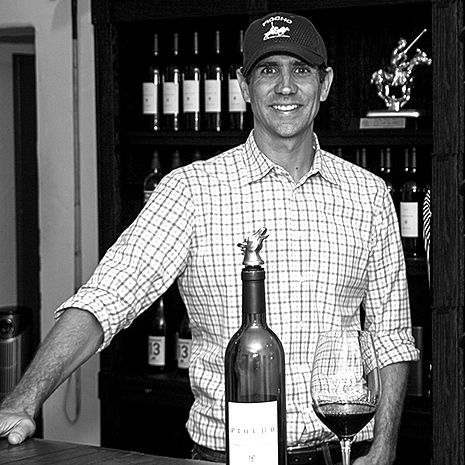
SEAN D. PITTS – GENERAL MANAGER, HAPPY CANYON VINEYARDS
Happy Canyon Vineyard is a family owned and operated estate vineyard and boutique winery on the central coast of California that has gained esteem with our award winning Bordeaux varietal wines. Our vineyard is nestled into the undulating hills of the beautiful Piocho Ranch at the eastern most edge of the Santa Ynez Valley. The ranch and vineyard is where we, the Barrack family, call home. We have taken great pride over the years in being stewards of the land and created wines that are unique to the beauty, richness, and heritage of the “terroir”. On our ranch we have two regulation sized Polo fields and many powerful Polo ponies where we blend our commitment to excellence in wine with a passion for Polo.
Happy Canyon Vineyard is nestled into the undulating hills of the beautiful Piocho Ranch, home to the Barrack family. The Barracks have taken great pride over the years in being stewards of the land and along with their wine maker Doug Margerum, have created something that is unique to the beauty and richness of the place. Piocho, is a Native American Indian word meaning “where the two rivers meet and go to heaven”. The ranch is also home to the “Piocho” polo team.
There are the two top wines called Brand and Ten–Goal and two companion wines; PIOCHO is the champion wine which is a classic Bordeaux style. There is also a nouveau styled Bordeaux blend released each Easter (perfect with Spring Lamb) called CHUKKER.
The Cabernet Sauvignon Block 8 is a truly special vineyard; head trained vines planted to the steep hillside adjacent to the road. No tractor works here as the terrain has been untouched by machine.
ABOUT SEAN:
As General Manager of Happy Canyon Vineyards, Sean Pitts is responsible for all operations of the vineyard and winery including partner contracts and personnel management. Sean oversees the sales and marketing programs, distribution, financial management, wine tasting room and day to day functions. Sean is responsible for inventory control, as well as meeting financial and strategic goals of the winery. Sean currently holds all fiscal management duties, including financial analysis; budget creation, forecasting, managing labor cost and P&L oversight.
As part of the Happy Canyon Vineyards family, Sean ensures ongoing performance of the business by facilitating decisions on strategy, long and short term objectives, determining wine styles, managing vineyards and bulk wine production.
Sean holds a B.S. in Chemical Engineering from the University of Colorado and an MBA from Pepperdine’s Graziadio School of Business and Management. Prior to working for Happy Canyon Vineyards Sean worked for over 14 years in the pharmaceutical industry working for companies such as Amgen, Genentech and Novartis.
WWW.HAPPYCANYONVINEYARD.COM
VIOLET GRGICH - CO-PROPRIETOR & VICE PRESIDENT OF SALES & MARKETING, GRGICH HILLS ESTATE
Grgich Hills Estate celebrates the 35th anniversary of The Great Chicago Chardonnay Showdown
In 1980 “The Great Chicago Showdown” brought together 221 of the best Chardonnays from around the world. Chardonnays from France, California, New York and even Bulgaria were collected for a historic first, the largest blind tasting of that time of one single varietal. The first vintage that Miljenko “Mike” Grgich crafted at Grgich Hills, his 1977 Chardonnay, emerged triumphant with a first place ribbon and the Chicago Tribune called it “The best Chardonnay in the world”! With this win so close on the heels of the famous 1976 Paris Tasting, where the 1973 Chateau Montelena Chardonnay that Mike made took first place over some of the best French white Burgundies and American Chardonnays, he soon became affectionately known as the “King of Chardonnay.”
In 2015, Grgich Hills Estate will celebrate the 35th anniversary of this historic tasting and its legacy in Chardonnay with vintner dinners across the country, a photo contest, a new mobile application launch and much more, all culminating into two festive gala dinners. The first will be in Chicago on May 7, 2015 and the second in the Napa Valley at the winery on May 16, 2015. Mike Grgich believes this is a significant event not just for Chicago and Grgich Hills but for all of America since it proves that “Luck is when preparation meets opportunity.”
Grgich Hills will launch “The Great Chicago Chardonnay Showdown” celebration starting on January 15, 2015. “This is a great opportunity for our winery not only to celebrate my father’s many accomplishments but also Chardonnay, a varietal that is enjoyed and loved by so many people,” says Violet Grgich. As Mike explains, “There is no scientific formula for making great wines. You make wines with your heart. You pour your love into them and nurture them like children, and transmit to them the richness of your spirit.” That philosophy is the very heartbeat of Grgich Hills Estate.
The winery is partnering with publications such as Robb Report, Chicago Tribune, Saveur Magazine, Modern Luxury Publication Group, and Food & Wine Magazine to unveil this great celebration. In addition, Grgich Hills will launch the “Taste the Legacy Photo Contest,” where consumers are encouraged to engage with the winery via social media and upload their best photos while enjoying Grgich Hills Estate wines. Each month will feature a different theme with the chance for consumers to win prizes on a monthly basis. The Grand Prize winner will win the ultimate grand prize - a trip to the beautiful Napa Valley for a once-in-a-lifetime experience at the Grgich Hills Estate winery and a private dinner with Mike and Violet Grgich.
ABOUT VIOLET:
Violet’s passion for wine began at an early age, as she literally grew up accompanying her father in the vineyards and cellar. She spent her summers at the winery, doing everything from bottling line work to laboratory analysis and working in the tasting room.
Attending the University of California, Davis, Violet earned a BA in music while taking classes in biology, chemistry, and enology. After graduation, she returned home to Grgich Hills to continue her education in the wine business, learning about daily operations of the winery from Mike. She received her Master of Music in harpsichord at Indiana University, and then joined the winery fulltime in 1988. She’s now responsible for daily management of the winery, as well as sales and marketing. She says that she has the ideal job: “I believe that wine is part of a healthy, happy and long life. Wine brings people together and makes them happy, which makes my job extraordinarily fulfilling.”
Involved with every aspect of the wine business, Violet enjoys wearing many different hats, often at the same time. She explains, “My dad insisted that in order to lead the winery I needed to work at every single position, starting at the bottom.” Violet continues to enjoy learning something new each day and following her grandfather’s and father’s philosophy of “Every day do something just a little better.”
Violet is pleased that the next generation of Grgich’s has joined the winery: Noel Grgich Shipman, her son born in 2005, accompanies her on sales trips, and enjoys every minute of it.
WWW.GRGICH.COM
Happy Canyon Vineyard is a family owned and operated estate vineyard and boutique winery on the central coast of California that has gained esteem with our award winning Bordeaux varietal wines. Our vineyard is nestled into the undulating hills of the beautiful Piocho Ranch at the eastern most edge of the Santa Ynez Valley. The ranch and vineyard is where we, the Barrack family, call home. We have taken great pride over the years in being stewards of the land and created wines that are unique to the beauty, richness, and heritage of the “terroir”. On our ranch we have two regulation sized Polo fields and many powerful Polo ponies where we blend our commitment to excellence in wine with a passion for Polo.
Happy Canyon Vineyard is nestled into the undulating hills of the beautiful Piocho Ranch, home to the Barrack family. The Barracks have taken great pride over the years in being stewards of the land and along with their wine maker Doug Margerum, have created something that is unique to the beauty and richness of the place. Piocho, is a Native American Indian word meaning “where the two rivers meet and go to heaven”. The ranch is also home to the “Piocho” polo team.
There are the two top wines called Brand and Ten–Goal and two companion wines; PIOCHO is the champion wine which is a classic Bordeaux style. There is also a nouveau styled Bordeaux blend released each Easter (perfect with Spring Lamb) called CHUKKER.
The Cabernet Sauvignon Block 8 is a truly special vineyard; head trained vines planted to the steep hillside adjacent to the road. No tractor works here as the terrain has been untouched by machine.
ABOUT SEAN:
As General Manager of Happy Canyon Vineyards, Sean Pitts is responsible for all operations of the vineyard and winery including partner contracts and personnel management. Sean oversees the sales and marketing programs, distribution, financial management, wine tasting room and day to day functions. Sean is responsible for inventory control, as well as meeting financial and strategic goals of the winery. Sean currently holds all fiscal management duties, including financial analysis; budget creation, forecasting, managing labor cost and P&L oversight.
As part of the Happy Canyon Vineyards family, Sean ensures ongoing performance of the business by facilitating decisions on strategy, long and short term objectives, determining wine styles, managing vineyards and bulk wine production.
Sean holds a B.S. in Chemical Engineering from the University of Colorado and an MBA from Pepperdine’s Graziadio School of Business and Management. Prior to working for Happy Canyon Vineyards Sean worked for over 14 years in the pharmaceutical industry working for companies such as Amgen, Genentech and Novartis.
WWW.HAPPYCANYONVINEYARD.COM
VIOLET GRGICH - CO-PROPRIETOR & VICE PRESIDENT OF SALES & MARKETING, GRGICH HILLS ESTATE
Grgich Hills Estate celebrates the 35th anniversary of The Great Chicago Chardonnay Showdown
In 1980 “The Great Chicago Showdown” brought together 221 of the best Chardonnays from around the world. Chardonnays from France, California, New York and even Bulgaria were collected for a historic first, the largest blind tasting of that time of one single varietal. The first vintage that Miljenko “Mike” Grgich crafted at Grgich Hills, his 1977 Chardonnay, emerged triumphant with a first place ribbon and the Chicago Tribune called it “The best Chardonnay in the world”! With this win so close on the heels of the famous 1976 Paris Tasting, where the 1973 Chateau Montelena Chardonnay that Mike made took first place over some of the best French white Burgundies and American Chardonnays, he soon became affectionately known as the “King of Chardonnay.”
In 2015, Grgich Hills Estate will celebrate the 35th anniversary of this historic tasting and its legacy in Chardonnay with vintner dinners across the country, a photo contest, a new mobile application launch and much more, all culminating into two festive gala dinners. The first will be in Chicago on May 7, 2015 and the second in the Napa Valley at the winery on May 16, 2015. Mike Grgich believes this is a significant event not just for Chicago and Grgich Hills but for all of America since it proves that “Luck is when preparation meets opportunity.”
Grgich Hills will launch “The Great Chicago Chardonnay Showdown” celebration starting on January 15, 2015. “This is a great opportunity for our winery not only to celebrate my father’s many accomplishments but also Chardonnay, a varietal that is enjoyed and loved by so many people,” says Violet Grgich. As Mike explains, “There is no scientific formula for making great wines. You make wines with your heart. You pour your love into them and nurture them like children, and transmit to them the richness of your spirit.” That philosophy is the very heartbeat of Grgich Hills Estate.
The winery is partnering with publications such as Robb Report, Chicago Tribune, Saveur Magazine, Modern Luxury Publication Group, and Food & Wine Magazine to unveil this great celebration. In addition, Grgich Hills will launch the “Taste the Legacy Photo Contest,” where consumers are encouraged to engage with the winery via social media and upload their best photos while enjoying Grgich Hills Estate wines. Each month will feature a different theme with the chance for consumers to win prizes on a monthly basis. The Grand Prize winner will win the ultimate grand prize - a trip to the beautiful Napa Valley for a once-in-a-lifetime experience at the Grgich Hills Estate winery and a private dinner with Mike and Violet Grgich.
ABOUT VIOLET:
Violet’s passion for wine began at an early age, as she literally grew up accompanying her father in the vineyards and cellar. She spent her summers at the winery, doing everything from bottling line work to laboratory analysis and working in the tasting room.
Attending the University of California, Davis, Violet earned a BA in music while taking classes in biology, chemistry, and enology. After graduation, she returned home to Grgich Hills to continue her education in the wine business, learning about daily operations of the winery from Mike. She received her Master of Music in harpsichord at Indiana University, and then joined the winery fulltime in 1988. She’s now responsible for daily management of the winery, as well as sales and marketing. She says that she has the ideal job: “I believe that wine is part of a healthy, happy and long life. Wine brings people together and makes them happy, which makes my job extraordinarily fulfilling.”
Involved with every aspect of the wine business, Violet enjoys wearing many different hats, often at the same time. She explains, “My dad insisted that in order to lead the winery I needed to work at every single position, starting at the bottom.” Violet continues to enjoy learning something new each day and following her grandfather’s and father’s philosophy of “Every day do something just a little better.”
Violet is pleased that the next generation of Grgich’s has joined the winery: Noel Grgich Shipman, her son born in 2005, accompanies her on sales trips, and enjoys every minute of it.
WWW.GRGICH.COM
Monday, February 16, 2015
02/16 WES HAGEN, CLOSE PEPE, NORM YOST, FLYING GOAT CELLARS, WORLD OF PINOT NOIR
WES HAGEN – VINEYARD MANAGER/WINEMAKER, CLOS PEPE
Clos Pepe Vineyard was purchased by Steve and Cathy Pepe in 1994 as a horse ranch, and established the 9th vineyard in what would become the Sta. Rita Hills AVA. Specializing in cool-climate, small production, craft-based Pinot Noir and Chardonnay, Clos Pepe is now recognized as a leader in local and national wine culture, wine education and providing fruit to some of the best winemakers in California. The Italians say, ‘Il vino e' la Poesia della Terra.’ Wine is the poetry of the earth. There is nothing that can obfuscate Pinot Noir’s ability to speak of a time and place. Of every plant on earth, Pinot Noir is unique in its ability to show every angle of a vintage, every silt particle in the soil, and every drop of morning dew that wet its leaves. Tea, coffee, white truffles—these can tell a story and confound us with their deliciousness, but the uncontested Queen of Natural Complexity must be Pinot Noir. We anticipate each vintage with a proper mix of anxiety and hope, knowing Mother Nature and the Sta. Rita Hills have a plan that will allow time and effort to fill a glass.
WHERE THE OLD WORLD MEETS THE NEW
Great wine is born, not made. The great wines of the world weartheir provenance proudly and show a regional character andquality that is impossible to imitate. The world’s most vauntedbottles all have one thing in common: they are grown on the edge ofwhere ripeness is achieved. Bordeaux, Burgundy, Champagne,Barolo — these are all areas where getting the fruit ripe is notassured. In most of California ripeness is easy to achieve. The goal becomes‘hang time’, allowing the fruit to hang on the vine as long as possibleto develop flavor, color and character. Clos Pepe, and the Sta. RitaHills AVA, are stuck between these two archetypes: we are one of the coolest areas on earth where winegrapes can be ripened, but wehave tons of California sunshine and a relatively dry Septemberand October for extended hang time and later harvest.
We love the complexity and age-worthiness of the Old World, butclaim our purely New World heritage. Making wines that have thefruit and impact of the New World, with the mineral structure andacidity of the greatest Old World bottles, gives us enviable baseingredients for making some of the most profound cool-climatewine in the world. These wines can be drunk at release when they're young and fruity(0-3 years), as the primary fruit begins to sublimate (4-7 years), orwhen fully mature like the greatest Grand Cru Burgundies (7-20years). The Santa Rita Hills and Clos Pepe make a wine for everytable, every plate and every palate.
THE WINES
The Santa Rita Hills produce many styles of Pinot Noir and Chardonnay — wines that will excite every palate and match with almost any food. The Chardonnays are naturally lean, mineral-laden and racy, but with more winemaking influence can exhibit richness and roundness: new oak, malolactic treatment, extended barrel aging. When young, the wines have austere structure and bright apple fruit with hints of tropical fruit and peach. Clos Pepe Chardonnay is crafted for both early enjoyment as well as cellaring for a decade or more. As the wines age they gain a hazelnut and mineral complexity, quite similar to Premier Cru Chablis and White Burgundy from great vintages. Try young Clos Pepe Chardonnays with oysters, fried chicken or barbecue. Older vintages can be enjoyed with sand dabs in a lemon cream sauce, firm cheeses, cream-based soups, or any kind of delicate seafood preparation. Clos Pepe Chardonnay seems to like 3-5 years from vintage date to fully integrate, and can last up to 10-12 years for those that appreciate full maturity and a bit of oxidative aromas and flavor.
Pinot Noirs from Clos Pepe can range from delicate and earthy to dense, purple, full-bodied Pinots that are among the darkest and richest on the planet. The Pinot Noirs from Clos Pepe also age wonderfully, but can also be drunk early in their life. Rich, dark vintages like 2002, 2003 and 2010 hold their baby-fat (primary fruit and richness) for 5-7 years and then begin mellowing slowly. Restrained, balanced wines like 2000, 2001, 2005, 2006, 2007, 2009 and 2011 age very similarly to Premier or even Grand Cru red Burgundy — being primary and juicy from release to 5-7 years old, and then slowly unfoldingwith minerality and aromas of dried flowers and earthy forest floor for another 5 years. Young Clos Pepe Pinot Noirs match beautifully with strong cheeses, duck confit, pork loin, lean steaks, venison with reduction, or almost anything that you can put on a plate. As the wine matures and loses some baby fat, try more delicate dishes and add Morel or Chanterelle mushrooms. A fully mature Clos Pepe Pinot Noir matches very well with simple presentations of salmon, game (especially quail and pheasant), and other light dishes that will not dominate the wine's delicate complexity.
WINEMAKING PHILOSOPHY
If all goes well in the Vineyard, the crop from an acre or two of Chardonnay or Pinot Noir is hand picked in the cool of night, and the fruit is delivered to the winery as the sun is rising or the fog becomes visible, like a blanket reminding us of the sleep we've missed. At this point the winemaking process begins.
While it might seem odd to provide our 'recipe' for winemaking, we don't see it as a trade secret. Some wineries thrive on secrecy and an insistence that what happens behind the cellar door is a magical process with French elves and Italian sprites sprinkling fairy dust over the fermenters, but we don't see it that way. Winemaking is a simple process for preserving the integrity of the fruit, the site and the vintage. Again, the magic is in the site, and we'd rather show a refreshing level of transparency in the way we farm and make wine so our customers, and those who visit the website, feel that they can clearly understand and intuit how we treat our fruit and wine, and how simple the fermentation and aging process can be.
CLOSPEPE.COM
NORM YOST – PROPRIETOR & WINEMAKER, FLYING GOAT CELLARS – BOARD MEMBER, WORLD OF PINOT NOIR
Two pygmy goats, Never and Epernay, inspired Norm to name his winery Flying Goat Cellars. The goats were his pets and lawnmowers and came to be a source of entertainment and enjoyment, with their unrestrained spiral loops, flipper turns and straight-legged leaps. When pondering a name for his new wines and brand, Norm wanted to project fun, enjoyment, and happiness. While many people put their own name or their children’s name on their label or vineyard, Norm’s playful spirit opted to name it after his kids. His kids, of course, were those two pygmy goat pets, who had always inspired him and made him laugh. The winery was “launched” with this same spirit of enthusiasm and Flying Goat Cellars was born.
The Vineyards - Cool Climate, California Central Coast Vineyards:
Pinot Noir is all about “place.” When grown with care (and patience!) and treated well at the winery, this grape will express a vineyard and region like no other varietal. We are fortunate to work with very dedicated and passionate vineyard owners and growers who farm Pinot Noir to showcase “place.”
ABOUT NORM:
Norm Yost graduated from the University of California, Davis with a bachelor’s degree in environmental studies in 1981. When his college roommate graduated from the winemaking program with a job and Norm didn’t have one, he morphed from a beer drinking football player into a winemaking craftsman. During his 30+ vintages in the industry, Norm worked for diverse wineries in cool climate regions, from Oregon’s Willamette Valley to the Russian River in Sonoma County and finally Santa Barbara County. He attributes his vast experience in the industry to the success of Flying Goat Cellars, which he launched in 2000. As the proprietor of his own business, Norm enjoys the freedom to focus on his passion for making vineyard designated Pinot Noir and sparkling wine. Half of Norm’s winemaking career has now been in Santa Barbara County, where he celebrates working with Central Coast fruit. He is currently president of World of Pinot Noir; formerly a board member of Sta. Rita Hills Winegrowers Alliance and Santa Barbara County Vintners Association and winemaking instructor at Allan Hancock College.
WOPN:
March 6th & 7th 2015 | BACARA RESORT & SPA | Santa Barbara, California
Our annual event takes place at the beginning of March and includes two days of in-depth Tasting seminars and excursions, Grand Tastings, a Burgundy seminar and tasting and gourmet, locally-influenced lunches and dinners. These extraordinary food and wine extravaganzas will be hosted by participating wineries and feature an outstanding panel of sommeliers from across the U.S.
Our mission is to bring Pinot Noir producers from the most exceptional and unique regions in the world together with Pinot Noir enthusiasts for a weekend of celebration and education on the shores of California's beautiful Central Coast.
Our annual event takes place at the beginning of March and includes two days of in-depth Tasting seminars and excursions, Grand Tastings, a Burgundy seminar and tasting and gourmet, locally-influenced lunches and dinners. These extraordinary food and wine extravaganzas will be hosted by participating wineries and feature an outstanding panel of sommeliers from across the U.S.
The World of Pinot Noir was established in 2001 by a small but dedicated group of winemakers from California’s South Central Coast. We are a non-profit 501 (c) (6) trade organization.
WWW.FLYINGGOATCELLARS.COM
WWW.WORLDOFPINOTNOIR.COM
Clos Pepe Vineyard was purchased by Steve and Cathy Pepe in 1994 as a horse ranch, and established the 9th vineyard in what would become the Sta. Rita Hills AVA. Specializing in cool-climate, small production, craft-based Pinot Noir and Chardonnay, Clos Pepe is now recognized as a leader in local and national wine culture, wine education and providing fruit to some of the best winemakers in California. The Italians say, ‘Il vino e' la Poesia della Terra.’ Wine is the poetry of the earth. There is nothing that can obfuscate Pinot Noir’s ability to speak of a time and place. Of every plant on earth, Pinot Noir is unique in its ability to show every angle of a vintage, every silt particle in the soil, and every drop of morning dew that wet its leaves. Tea, coffee, white truffles—these can tell a story and confound us with their deliciousness, but the uncontested Queen of Natural Complexity must be Pinot Noir. We anticipate each vintage with a proper mix of anxiety and hope, knowing Mother Nature and the Sta. Rita Hills have a plan that will allow time and effort to fill a glass.
WHERE THE OLD WORLD MEETS THE NEW
Great wine is born, not made. The great wines of the world weartheir provenance proudly and show a regional character andquality that is impossible to imitate. The world’s most vauntedbottles all have one thing in common: they are grown on the edge ofwhere ripeness is achieved. Bordeaux, Burgundy, Champagne,Barolo — these are all areas where getting the fruit ripe is notassured. In most of California ripeness is easy to achieve. The goal becomes‘hang time’, allowing the fruit to hang on the vine as long as possibleto develop flavor, color and character. Clos Pepe, and the Sta. RitaHills AVA, are stuck between these two archetypes: we are one of the coolest areas on earth where winegrapes can be ripened, but wehave tons of California sunshine and a relatively dry Septemberand October for extended hang time and later harvest.
We love the complexity and age-worthiness of the Old World, butclaim our purely New World heritage. Making wines that have thefruit and impact of the New World, with the mineral structure andacidity of the greatest Old World bottles, gives us enviable baseingredients for making some of the most profound cool-climatewine in the world. These wines can be drunk at release when they're young and fruity(0-3 years), as the primary fruit begins to sublimate (4-7 years), orwhen fully mature like the greatest Grand Cru Burgundies (7-20years). The Santa Rita Hills and Clos Pepe make a wine for everytable, every plate and every palate.
THE WINES
The Santa Rita Hills produce many styles of Pinot Noir and Chardonnay — wines that will excite every palate and match with almost any food. The Chardonnays are naturally lean, mineral-laden and racy, but with more winemaking influence can exhibit richness and roundness: new oak, malolactic treatment, extended barrel aging. When young, the wines have austere structure and bright apple fruit with hints of tropical fruit and peach. Clos Pepe Chardonnay is crafted for both early enjoyment as well as cellaring for a decade or more. As the wines age they gain a hazelnut and mineral complexity, quite similar to Premier Cru Chablis and White Burgundy from great vintages. Try young Clos Pepe Chardonnays with oysters, fried chicken or barbecue. Older vintages can be enjoyed with sand dabs in a lemon cream sauce, firm cheeses, cream-based soups, or any kind of delicate seafood preparation. Clos Pepe Chardonnay seems to like 3-5 years from vintage date to fully integrate, and can last up to 10-12 years for those that appreciate full maturity and a bit of oxidative aromas and flavor.
Pinot Noirs from Clos Pepe can range from delicate and earthy to dense, purple, full-bodied Pinots that are among the darkest and richest on the planet. The Pinot Noirs from Clos Pepe also age wonderfully, but can also be drunk early in their life. Rich, dark vintages like 2002, 2003 and 2010 hold their baby-fat (primary fruit and richness) for 5-7 years and then begin mellowing slowly. Restrained, balanced wines like 2000, 2001, 2005, 2006, 2007, 2009 and 2011 age very similarly to Premier or even Grand Cru red Burgundy — being primary and juicy from release to 5-7 years old, and then slowly unfoldingwith minerality and aromas of dried flowers and earthy forest floor for another 5 years. Young Clos Pepe Pinot Noirs match beautifully with strong cheeses, duck confit, pork loin, lean steaks, venison with reduction, or almost anything that you can put on a plate. As the wine matures and loses some baby fat, try more delicate dishes and add Morel or Chanterelle mushrooms. A fully mature Clos Pepe Pinot Noir matches very well with simple presentations of salmon, game (especially quail and pheasant), and other light dishes that will not dominate the wine's delicate complexity.
WINEMAKING PHILOSOPHY
If all goes well in the Vineyard, the crop from an acre or two of Chardonnay or Pinot Noir is hand picked in the cool of night, and the fruit is delivered to the winery as the sun is rising or the fog becomes visible, like a blanket reminding us of the sleep we've missed. At this point the winemaking process begins.
While it might seem odd to provide our 'recipe' for winemaking, we don't see it as a trade secret. Some wineries thrive on secrecy and an insistence that what happens behind the cellar door is a magical process with French elves and Italian sprites sprinkling fairy dust over the fermenters, but we don't see it that way. Winemaking is a simple process for preserving the integrity of the fruit, the site and the vintage. Again, the magic is in the site, and we'd rather show a refreshing level of transparency in the way we farm and make wine so our customers, and those who visit the website, feel that they can clearly understand and intuit how we treat our fruit and wine, and how simple the fermentation and aging process can be.
CLOSPEPE.COM
NORM YOST – PROPRIETOR & WINEMAKER, FLYING GOAT CELLARS – BOARD MEMBER, WORLD OF PINOT NOIR
Two pygmy goats, Never and Epernay, inspired Norm to name his winery Flying Goat Cellars. The goats were his pets and lawnmowers and came to be a source of entertainment and enjoyment, with their unrestrained spiral loops, flipper turns and straight-legged leaps. When pondering a name for his new wines and brand, Norm wanted to project fun, enjoyment, and happiness. While many people put their own name or their children’s name on their label or vineyard, Norm’s playful spirit opted to name it after his kids. His kids, of course, were those two pygmy goat pets, who had always inspired him and made him laugh. The winery was “launched” with this same spirit of enthusiasm and Flying Goat Cellars was born.
The Vineyards - Cool Climate, California Central Coast Vineyards:
Pinot Noir is all about “place.” When grown with care (and patience!) and treated well at the winery, this grape will express a vineyard and region like no other varietal. We are fortunate to work with very dedicated and passionate vineyard owners and growers who farm Pinot Noir to showcase “place.”
ABOUT NORM:
Norm Yost graduated from the University of California, Davis with a bachelor’s degree in environmental studies in 1981. When his college roommate graduated from the winemaking program with a job and Norm didn’t have one, he morphed from a beer drinking football player into a winemaking craftsman. During his 30+ vintages in the industry, Norm worked for diverse wineries in cool climate regions, from Oregon’s Willamette Valley to the Russian River in Sonoma County and finally Santa Barbara County. He attributes his vast experience in the industry to the success of Flying Goat Cellars, which he launched in 2000. As the proprietor of his own business, Norm enjoys the freedom to focus on his passion for making vineyard designated Pinot Noir and sparkling wine. Half of Norm’s winemaking career has now been in Santa Barbara County, where he celebrates working with Central Coast fruit. He is currently president of World of Pinot Noir; formerly a board member of Sta. Rita Hills Winegrowers Alliance and Santa Barbara County Vintners Association and winemaking instructor at Allan Hancock College.
WOPN:
March 6th & 7th 2015 | BACARA RESORT & SPA | Santa Barbara, California
Our annual event takes place at the beginning of March and includes two days of in-depth Tasting seminars and excursions, Grand Tastings, a Burgundy seminar and tasting and gourmet, locally-influenced lunches and dinners. These extraordinary food and wine extravaganzas will be hosted by participating wineries and feature an outstanding panel of sommeliers from across the U.S.
Our mission is to bring Pinot Noir producers from the most exceptional and unique regions in the world together with Pinot Noir enthusiasts for a weekend of celebration and education on the shores of California's beautiful Central Coast.
Our annual event takes place at the beginning of March and includes two days of in-depth Tasting seminars and excursions, Grand Tastings, a Burgundy seminar and tasting and gourmet, locally-influenced lunches and dinners. These extraordinary food and wine extravaganzas will be hosted by participating wineries and feature an outstanding panel of sommeliers from across the U.S.
The World of Pinot Noir was established in 2001 by a small but dedicated group of winemakers from California’s South Central Coast. We are a non-profit 501 (c) (6) trade organization.
WWW.FLYINGGOATCELLARS.COM
WWW.WORLDOFPINOTNOIR.COM
Monday, February 9, 2015
02/09 BOB TILLMAN, ALTA COLINA, ADELAIDA DISTRICT AVA, EMMA SWAIN, ST. SUPERY
BOB TILLMAN - OWNER/WINEMAKER, ALTA COLINA – NEW ADELAIDA DISTRICT AVA
HISTORY
Since the 1970’s, Bob Tillman has looked for the site where he could plant a world-class vineyard. He didn’t find that property until the Tillman family moved to the Central Coast of California and tasted the wines coming out of Paso Robles. Finally, he and his wife Lynn knew they were in the place where they could produce the kind of wines they love to drink.
In 2003, after an extensive search for the ideal location, Bob found the beautiful hilltop property on Adelaida Road in Paso Robles that would become Alta Colina Vineyard. Nestled high in the rugged coast range mountains, Alta Colina Vineyard’s natural beauty soothes the spirit with its 360 degree vistas and calming seclusion.
To achieve great wines from this spectacular site, Bob assembled a world-class team: John Crossland, Dean Harrell, and Steve Vierra from Vineyard Professional Services planned, planted, and farmed the vineyard; Scott Hawley consulted on the winemaking and the crucial decision on when to harvest; and Bob makes his wines in space leased from Alex and Monica Villicana. Collectively, this expert group has over 100 vintages under its belt!
Finding the incredible site and assembling the expert team were only the first steps in preparing the property for planting. First, the narrow track up the mountain had to be expanded to a workable agricultural road—a non-trivial task given the very steep terrain. A high volume water well was drilled at the bottom of the mountain and piping installed to carry water over 500 feet up the hill where a reservoir holds the vital irrigation supply. Then the soils were ripped to allow free vine rooting, the drip irrigation system constructed, and finally the trellis was put in place.
After more than a year of site preparation, the first vine was planted on April 23, 2005 by Ann Walsh, Lynn’s mother. That vine was Petite Sirah in vineyard block 7—now named Ann’s Block to commemorate the event. By the end of May, 40,773 vines were planted, consuming 31.1 acres broken into 15 blocks. Four Rhône red wine varietals and 4 white Rhône varietals are planted. Most are sourced from a French government nursery (the so-called ENTAV selections) with 1 block coming from John Alban’s vineyard in the Edna Valley, located in Southern San Luis Obispo County.
The first three growing seasons were dedicated to vine development. The focus was on developing robust plants with extensive root systems while carefully pruning to shape the above-ground canopy for optimal fruit production. In 2007 the vineyard produced Alta Colina’s first crop—tiny by commercial standards, but adequate to give the first taste of what is to come. As we had hoped, the wines are excellent—the future looks very bright for Alta Colina Vineyard & Winery.
ABOUT BOB:
Bob Tillman is the man behind Alta Colina. After 35 years in the high-tech business world, Bob launched Alta Colina in 2003. From the beginning, the enterprise was dedicated to nurturing world-class wines from a magical site tucked into the Coast Range west of Paso Robles. But it’s really more than creating world-class wines—Bob also pulled together a group of top-notch people that have formed an exceptional team with collective experience stretching over 3 generations. It’s not just the vineyard site that is magical at Alta Colina.
Lynn Tillman is the one-woman support staff for the vineyard and winery operations — and she supervises Justin, the harvest intern.
WWW.ALTACOLINAWINE.COM
EMMA SWAIN – CEO, ST. SUPERY – NEW VEGGIES & VINO PAIRING
St. Supéry Estate Vineyards & Winery is the largest family owned, sustainably farmed and estate produced winery in Napa Valley. Our land and our winery are certified Napa Green.
ABOUT EMMA:
Emma Swain is the CEO of St Supéry Estate Vineyards & Winery. She received her Bachelor of Science in Agriculture and Managerial Economics from the University of California, Davis and is a Certified Public Accountant. Emma has worked in the wine industry for more than 20 years. She began her career with Niebaum-Coppola Winery and served as the Chief Operating Officer at Sebastiani Vineyards prior to joining St. Supéry Estate. Emma currently serves as a board member for the Napa Valley Vintners, as well as serving on multiple sub-committees. Emma also volunteers locally with a number of environmental, educational and health-based charities. She is an avid runner and has several half marathons under her belt of accomplishments.
ABOUT VEGGIES & VINO PAIRING:
WWW.STSUPERY.COM
Since the 1970’s, Bob Tillman has looked for the site where he could plant a world-class vineyard. He didn’t find that property until the Tillman family moved to the Central Coast of California and tasted the wines coming out of Paso Robles. Finally, he and his wife Lynn knew they were in the place where they could produce the kind of wines they love to drink.
In 2003, after an extensive search for the ideal location, Bob found the beautiful hilltop property on Adelaida Road in Paso Robles that would become Alta Colina Vineyard. Nestled high in the rugged coast range mountains, Alta Colina Vineyard’s natural beauty soothes the spirit with its 360 degree vistas and calming seclusion.
To achieve great wines from this spectacular site, Bob assembled a world-class team: John Crossland, Dean Harrell, and Steve Vierra from Vineyard Professional Services planned, planted, and farmed the vineyard; Scott Hawley consulted on the winemaking and the crucial decision on when to harvest; and Bob makes his wines in space leased from Alex and Monica Villicana. Collectively, this expert group has over 100 vintages under its belt!
Finding the incredible site and assembling the expert team were only the first steps in preparing the property for planting. First, the narrow track up the mountain had to be expanded to a workable agricultural road—a non-trivial task given the very steep terrain. A high volume water well was drilled at the bottom of the mountain and piping installed to carry water over 500 feet up the hill where a reservoir holds the vital irrigation supply. Then the soils were ripped to allow free vine rooting, the drip irrigation system constructed, and finally the trellis was put in place.
After more than a year of site preparation, the first vine was planted on April 23, 2005 by Ann Walsh, Lynn’s mother. That vine was Petite Sirah in vineyard block 7—now named Ann’s Block to commemorate the event. By the end of May, 40,773 vines were planted, consuming 31.1 acres broken into 15 blocks. Four Rhône red wine varietals and 4 white Rhône varietals are planted. Most are sourced from a French government nursery (the so-called ENTAV selections) with 1 block coming from John Alban’s vineyard in the Edna Valley, located in Southern San Luis Obispo County.
The first three growing seasons were dedicated to vine development. The focus was on developing robust plants with extensive root systems while carefully pruning to shape the above-ground canopy for optimal fruit production. In 2007 the vineyard produced Alta Colina’s first crop—tiny by commercial standards, but adequate to give the first taste of what is to come. As we had hoped, the wines are excellent—the future looks very bright for Alta Colina Vineyard & Winery.
ABOUT BOB:
Bob Tillman is the man behind Alta Colina. After 35 years in the high-tech business world, Bob launched Alta Colina in 2003. From the beginning, the enterprise was dedicated to nurturing world-class wines from a magical site tucked into the Coast Range west of Paso Robles. But it’s really more than creating world-class wines—Bob also pulled together a group of top-notch people that have formed an exceptional team with collective experience stretching over 3 generations. It’s not just the vineyard site that is magical at Alta Colina.
Lynn Tillman is the one-woman support staff for the vineyard and winery operations — and she supervises Justin, the harvest intern.
WWW.ALTACOLINAWINE.COM
EMMA SWAIN – CEO, ST. SUPERY – NEW VEGGIES & VINO PAIRING
St. Supéry Estate Vineyards & Winery is the largest family owned, sustainably farmed and estate produced winery in Napa Valley. Our land and our winery are certified Napa Green.
ABOUT EMMA:
Emma Swain is the CEO of St Supéry Estate Vineyards & Winery. She received her Bachelor of Science in Agriculture and Managerial Economics from the University of California, Davis and is a Certified Public Accountant. Emma has worked in the wine industry for more than 20 years. She began her career with Niebaum-Coppola Winery and served as the Chief Operating Officer at Sebastiani Vineyards prior to joining St. Supéry Estate. Emma currently serves as a board member for the Napa Valley Vintners, as well as serving on multiple sub-committees. Emma also volunteers locally with a number of environmental, educational and health-based charities. She is an avid runner and has several half marathons under her belt of accomplishments.
ABOUT VEGGIES & VINO PAIRING:
- Available to all winery visitors by appointment, $40/guest
- Call 707.963.4507 or visit www.stsupery.com to reserve the experience
- Features four of our Napa Valley estate wines and four vegetarian small bites
- Each pairing features seasonal produce from our Culinary Garden and Dollarhide Ranch
- Changes regularly based on what’s coming out of the gardens
- Pairings are developed by our Sommelier and Guest Experience Manager, F. Scott Tracy
- Current pairings include:
- 2012 Napa Valley Estate Virtú (Semillon-Sauvignon Blanc blend) and bruschetta with kale and hummus
- 010 Dollarhide Estate Vineyard Malbec and beet, turnip and potato salad
- 2012 Napa Valley Estate Élu (Cabernet Sauvignon dominant blend) and eggplant parmesan
- 2010 Rutherford Estate Vineyard Cabernet Sauvignon and mushroom caps stuffed with burrata drizzled with truffle oil
- All guests are treated to full recipes for each pairing so they can bring a taste of Napa Valley home to their kitchens
WWW.STSUPERY.COM
Labels:
ADELAIDA DISTRICT AVA,
ALTA COLINA,
BOB TILLMAN,
EMMA SWAIN,
ST. SUPERY
Monday, February 2, 2015
02/02 BEN MAYO, EBERLE WINERY, CATE CONNIFF, NAPA VALLEY VINTNERS
BEN MAYO – WINEMAKER, EBERLE WINERY
Gary Eberle grew up in a small town in Pennsylvania and went to Penn State on a football scholarship. After graduating with a Bachelor's of Science in biology, he attended Louisiana State University (LSU) where he continued his graduate work studying cellular genetics. While attending LSU, Gary developed an appreciation for wine and changed his academic path to become a winemaker. He traveled west to California to study enology at U.C. Davis where he received a degree in Enology in 1971 and then headed south to Paso Robles in 1973.
Gary launched his career as a winemaker and as the “Pioneer” of Paso Robles Wine Region by establishing Estrella River Winery & Vineyards. In the late 70’s, he decided to pursue his own project and acquired nearly 64 acres just down the road from Estrella River Winery. Shortly thereafter, Gary released his first Eberle wine, the 1979 Cabernet Sauvignon debuting the iconic boar logo, depicting the German origin of the name Eberle, meaning “small boar.”
THE WINERY
By 1984 the Eberle Winery production facility and tasting room were open for business and in 1994 Gary expanded underground, building the first wine caves in Paso Robles. Now, over 30 years later, Gary Eberle still greet guests daily with complimentary wine tastings, public tours of the production facility and 16,000 square feet of underground caves. They also play host to a variety of delicious and entertaining events held at the winery throughout the year.
WINEMAKER, BEN MAYO
Winemaker, Ben Mayo is a native of San Luis Obispo. He pursued his passion for art and science, earning a degree from UC Santa Cruz. From there, Ben worked in the art world of San Francisco, where he was introduced to food and wine.
Influenced to combine his newfound enjoyment of food and wine with his passion for art, he returned to the Central Coast in 1998 and found winemaking to be the ideal outlet. Since 2001, Ben has worked with a small team to produce the vast array of Eberle wines, integrating his artisitic personality, with a hands on approach from the vineyard to the final wine.
"For me, making wine is about elegance. I pay attention to detail. As I like to say, my science background gets me through harvest, but it's my artistic side that helps me in blending and creating beautiful wines." - Ben Mayo, Winemaker
WWW.EBERLEWINERY.COM
CATE CONNIFF - COMMUNICATIONS MANAGER, NAPA VALLEY VINTNERS
ABOUT THE NAPA VALLEY VINTNERS
The Napa Valley Vintners nonprofit trade association has been cultivating excellence for 70 years by inspiring its more than 500 members to produce consistent quality wines, provide environmental leadership and care for the extraordinary place they call home.
OUR MISSION
To promote, protect and enhance the Napa Valley appellation, our wines, vintners and community.
OUR VISION
Through our collective efforts the Napa Valley will be:
• The leading wine region worldwide
• Preserved and enhanced for future generations
OUR GOALS
• Position the Napa Valley as the premier wine region in the world
• Champion and sustain the Napa Valley wine community
• Engage and support our members through the work of an effective organization
Through our signature marketing programs, industry advocacy and comprehensive member resources, we work continuously to be the voice of the Napa Valley wine industry for consumers, members of the wine trade and media outlets around the globe, and we strive to be the essential trade organization for any vintner producing Napa Valley wine in the Napa Valley.
WWW.NAPAVINTNERS.COM
Gary launched his career as a winemaker and as the “Pioneer” of Paso Robles Wine Region by establishing Estrella River Winery & Vineyards. In the late 70’s, he decided to pursue his own project and acquired nearly 64 acres just down the road from Estrella River Winery. Shortly thereafter, Gary released his first Eberle wine, the 1979 Cabernet Sauvignon debuting the iconic boar logo, depicting the German origin of the name Eberle, meaning “small boar.”
THE WINERY
By 1984 the Eberle Winery production facility and tasting room were open for business and in 1994 Gary expanded underground, building the first wine caves in Paso Robles. Now, over 30 years later, Gary Eberle still greet guests daily with complimentary wine tastings, public tours of the production facility and 16,000 square feet of underground caves. They also play host to a variety of delicious and entertaining events held at the winery throughout the year.
WINEMAKER, BEN MAYO
Winemaker, Ben Mayo is a native of San Luis Obispo. He pursued his passion for art and science, earning a degree from UC Santa Cruz. From there, Ben worked in the art world of San Francisco, where he was introduced to food and wine.
Influenced to combine his newfound enjoyment of food and wine with his passion for art, he returned to the Central Coast in 1998 and found winemaking to be the ideal outlet. Since 2001, Ben has worked with a small team to produce the vast array of Eberle wines, integrating his artisitic personality, with a hands on approach from the vineyard to the final wine.
"For me, making wine is about elegance. I pay attention to detail. As I like to say, my science background gets me through harvest, but it's my artistic side that helps me in blending and creating beautiful wines." - Ben Mayo, Winemaker
WWW.EBERLEWINERY.COM
CATE CONNIFF - COMMUNICATIONS MANAGER, NAPA VALLEY VINTNERS
ABOUT THE NAPA VALLEY VINTNERS
The Napa Valley Vintners nonprofit trade association has been cultivating excellence for 70 years by inspiring its more than 500 members to produce consistent quality wines, provide environmental leadership and care for the extraordinary place they call home.
OUR MISSION
To promote, protect and enhance the Napa Valley appellation, our wines, vintners and community.
OUR VISION
Through our collective efforts the Napa Valley will be:
• The leading wine region worldwide
• Preserved and enhanced for future generations
OUR GOALS
• Position the Napa Valley as the premier wine region in the world
• Champion and sustain the Napa Valley wine community
• Engage and support our members through the work of an effective organization
Through our signature marketing programs, industry advocacy and comprehensive member resources, we work continuously to be the voice of the Napa Valley wine industry for consumers, members of the wine trade and media outlets around the globe, and we strive to be the essential trade organization for any vintner producing Napa Valley wine in the Napa Valley.
WWW.NAPAVINTNERS.COM
Labels:
BEN MAYO,
CATE CONNIFF,
EBERLE WINERY,
NAPA VALLEY VINTNERS
Subscribe to:
Posts (Atom)